Medical and dental practices in Austin face a higher standard for cleanliness. Patients notice the reception area, the restroom, and the exam room before they ever speak with a provider. These best practices help practices build a cleaning program that supports patient confidence and a consistent standard of care.
Cleaning a healthcare-adjacent facility is about consistency and clear documentation. The scope should match your practice's layout and patient flow.
Reception and Waiting Areas
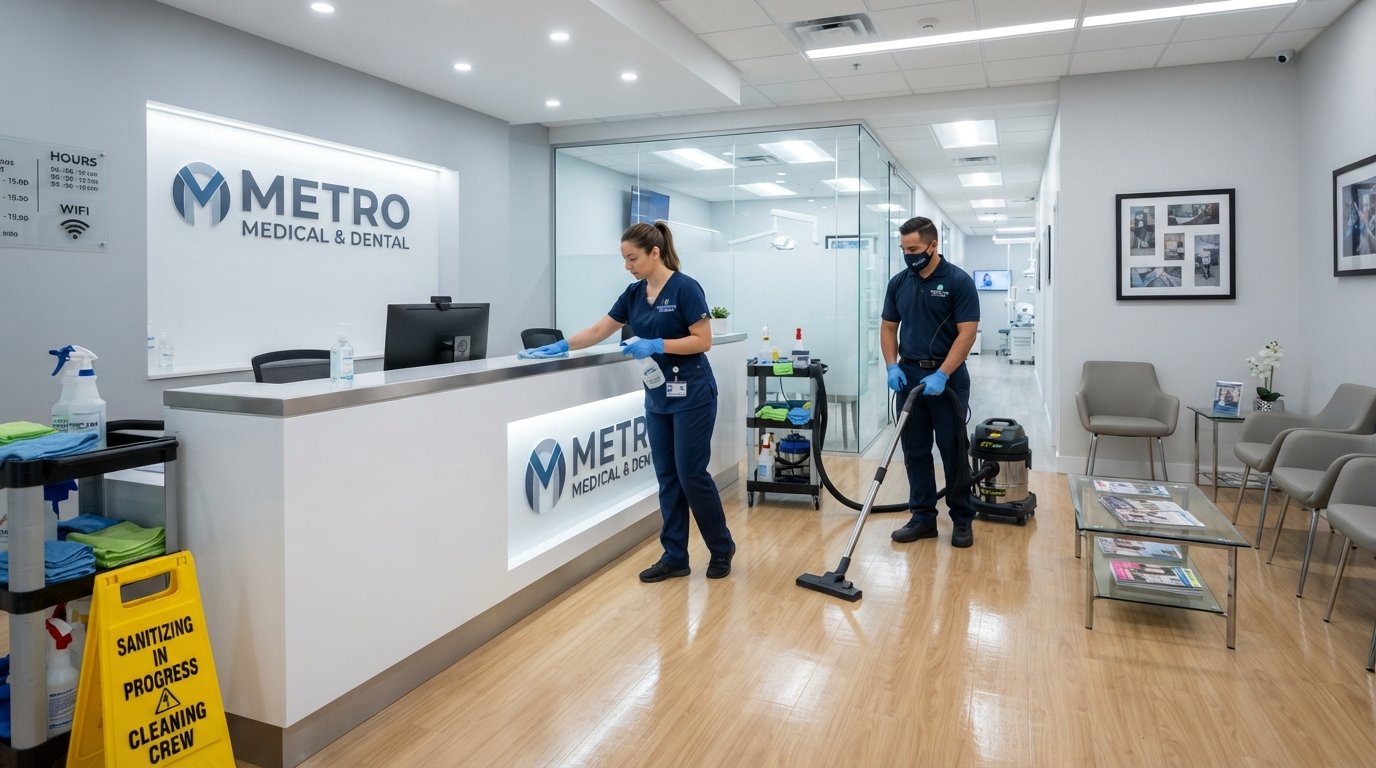
The waiting room is the first impression. Chairs, magazines or tablets, counters, and door handles all get attention so patients arrive to a tidy, calm space.
Exam and Consultation Rooms
Exam rooms need turnover between patients — surfaces, chairs, and fixtures wiped down so each patient enters a clean space. The exact protocol is built around your practice's workflow.
Restrooms
Patient restrooms are heavily used and closely scrutinized. Daily attention to fixtures, floors, and restocking keeps them presentable throughout the day.
High-Touch Surface Disinfecting
Door handles, rails, chair arms, and check-in tablets are touched constantly. Building disinfecting into every visit helps reduce the spread of germs in a patient-facing environment.
Scheduling Around Patient Hours
Many practices prefer cleaning before opening, after hours, or between patient blocks. We coordinate timing so cleaning never disrupts care.
A written scope, followed consistently, is what keeps a medical office at standard visit after visit.
Documenting Your Protocol
Any specific protocols, products, or areas of concern you require are confirmed during the walkthrough and documented in your service plan. That documentation keeps the standard consistent regardless of who performs the visit.